Managers: Diagnose Remote Developer Performance with SPACE and DORA
Measure remote developer performance across multiple dimensions and prioritize outcomes and well-being over single activity metrics. This week, pick three signals: one outcome measure, one flow measure, and one well-being measure, then tell your team you are doing it. Run a two to four week baseline before drawing any conclusions, and treat commit counts or hours logged as noise, not evidence.
TL;DR:
- Tracking outcome metrics like feature delivery and bug rates provides clearer insights than activity counts like commits or hours logged.
- Monitoring collaboration friction and flow signals, such as review turnaround and cycle time, predicts team productivity and developer well-being.
- Avoid surveillance practices like keystroke tracking and commit scoring to preserve trust and reduce burnout risks.
- Conducting a short baseline, diagnosing systemic issues, and applying targeted interventions over several weeks improves remote performance sustainably.
- Combining automated tools with human conversations ensures accurate assessments and maintains psychological safety within remote teams.
Table of Contents
- Why one metric never tells the whole story
- Concrete signals to track across the SPACE dimensions
- What not to do: monitoring mistakes and privacy risks
- A simple cycle to diagnose and fix performance problems
- A manager’s playbook: check-ins, goals, and protecting flow
- Combining tools and human judgment without eroding trust
- What engagements with distributed teams actually teach you
- How a nearshore team extension fits into this picture
- FAQ
- Sources
Why one metric never tells the whole story
Remote work removes the hallway conversations and visible busyness that managers used to lean on, often without realizing it. When you cannot see someone typing, it becomes tempting to replace that visibility with a number, and that number is usually the wrong one.
The SPACE framework addresses this by recommending five dimensions rather than one score:
- Satisfaction and well-being: how developers feel about their work, tools, and team.
- Performance: outcomes and the quality of what gets shipped, not just that something shipped.
- Activity: counts of actions like commits or pull requests, useful only as context.
- Communication and collaboration: how smoothly information and decisions move between people.
- Efficiency and flow: how much uninterrupted progress developers can make without friction.
No single dimension is sufficient on its own, and the SPACE authors are explicit that productivity is a constellation of signals in tension, not a formula.
Google Cloud’s 2025 DORA report reinforces this from the delivery side. Delivery metrics like deployment frequency or lead time tell you what happened, but they do not tell you why, and the report found that teams cluster into distinct archetypes depending on how delivery performance interacts with stability, friction, and well-being. The report also found that AI tools amplify whatever strengths or weaknesses a team already has, which means a team with weak platform practices sees that weakness magnified rather than fixed by AI adoption.
The managerial consequence is straightforward: less informal observation means a higher risk of defaulting to whatever is easiest to count. Activity is easy to count. Value is not. Building your evaluation around the dimension that is easiest to measure, rather than the one that matters most, is how remote teams end up optimizing for the wrong thing.
Concrete signals to track across the SPACE dimensions
Translating SPACE into daily practice means picking a small set of signals per dimension rather than trying to measure everything.
- Outcome signals: feature delivery against agreed goals, customer-facing bug rates, and business metrics tied to a release.
- Quality signals: post-release defect rates, rollback frequency, and code review findings that surface recurring issues.
- Flow signals: cycle time from first commit to merge, number of context switches per day, and self-reported focus time.
- Collaboration signals: review turnaround time, pairing frequency, and how quickly blockers get escalated and resolved.
- Well-being signals: short pulse surveys on satisfaction, workload, and perceived support, gathered monthly rather than daily.
Some of these are diagnostic, meaning they point you toward a problem worth investigating, and some are evaluative, meaning they support a judgment about outcomes. Cycle time and review turnaround are diagnostic: a spike tells you to look closer, not to conclude someone is underperforming. Outcome delivery against agreed goals is closer to evaluative, especially when reviewed over a full quarter rather than a single sprint.
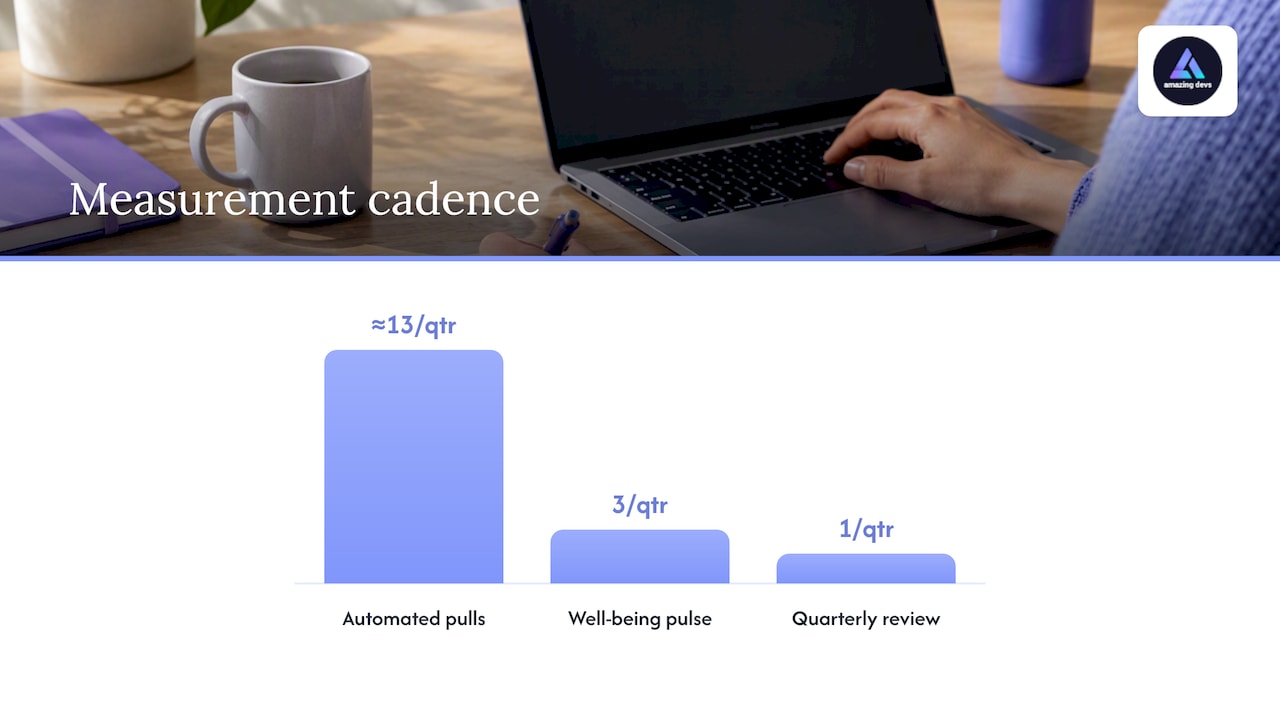
A reasonable cadence combines weekly automated pulls from your delivery tooling, a monthly well-being pulse survey, and a quarterly review that weighs outcomes alongside the other four dimensions together.
Collaboration difficulty is one of the strongest predictors of how unproductive developers feel, according to research from Microsoft and Vista Equity Partners, which found that developers at companies with collaboration friction were substantially more likely to report feeling unproductive and more likely to be job hunting. That single finding argues for treating collaboration signals as early warnings, not afterthoughts.
What not to do: monitoring mistakes and privacy risks
Some practices that feel like rigor actually destroy the trust that makes remote teams function.
- Tracking keystrokes, mouse movement, or screen time as a proxy for effort.
- Ranking developers by commit counts or lines of code, which rewards busywork over judgment.
- Treating online status or message response speed as a stand-in for engagement.
- Using surveillance software to monitor idle time rather than outcomes.
These practices tend to produce presenteeism, where developers perform visible activity instead of doing their best thinking, and they push people toward gaming whatever is being counted. A developer who knows commits are scored will commit more often and smaller, regardless of whether that helps anyone. Over time, this erodes psychological safety and increases burnout risk, since people start optimizing for appearing busy rather than solving problems well.
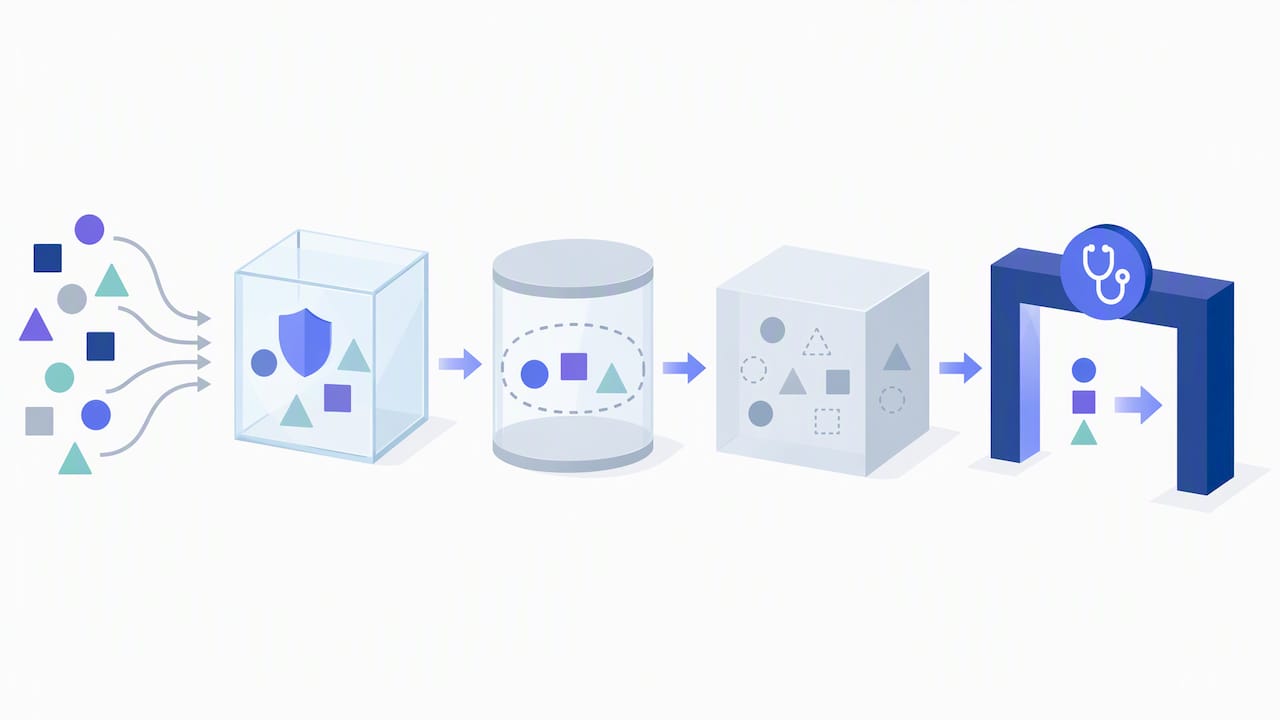
An ethical checklist keeps measurement useful instead of corrosive: be transparent about what you collect and why, limit scope to what you actually act on, anonymize data wherever individual identification is not necessary, and use findings for diagnosis first, discipline only as a last resort and only with clear evidence.
Pro Tip: Before adopting any new metric, ask whether you would be comfortable explaining it to your team in plain language. If the explanation sounds defensive, do not adopt the metric.
A simple cycle to diagnose and fix performance problems
Most remote performance problems are system problems wearing an individual disguise, and a short improvement cycle helps you tell the difference.
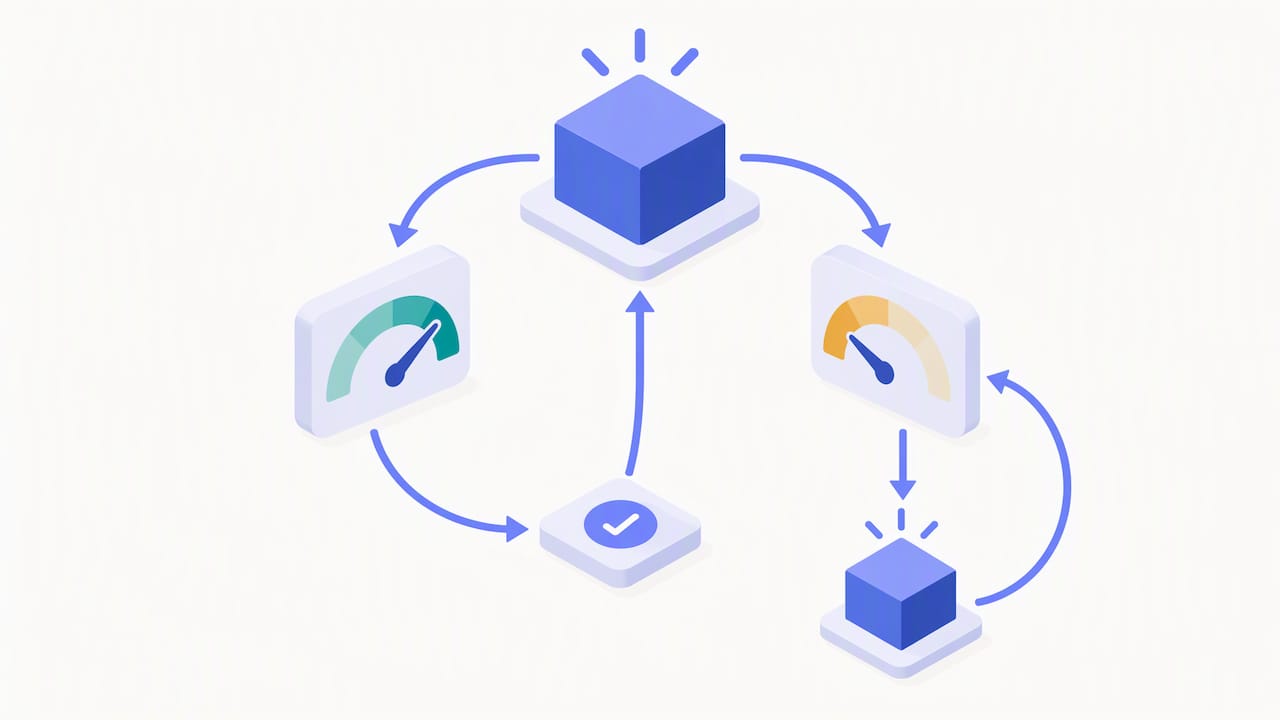
- Baseline: pick three to six signals spanning outcome, flow, and well-being, and track them for two to four weeks without changing anything else.
- Diagnose: look for correlations across signals, talk directly with developers about where they get stuck, and map handoffs between roles or teams to find where delays accumulate.
- Intervene: choose one targeted change, such as fixing a slow build pipeline or restructuring review assignments, and resist the urge to change several things at once.
- Reassess: after another two to four weeks, compare delivery, quality, and well-being signals together rather than looking at any one in isolation.
The 2025 DORA report supports exactly this approach: diagnose which team archetype you resemble, then apply one targeted intervention instead of a generic best-practice checklist, since the same fix does not work equally well for every team profile.
If the intervention improves delivery speed but well-being scores drop, that trade-off is information, not a success. It usually means you solved a symptom while adding pressure somewhere else, which calls for a second, narrower intervention rather than declaring victory.
A manager’s playbook: check-ins, goals, and protecting flow
A short weekly check-in works better than a long one. Cover four things: progress against the current goal, evidence that supports that progress, any blockers, and a quick well-being check such as “what is making this week harder than it needs to be.”
Goals land better when they are written around product impact rather than activity. Instead of “close 15 tickets,” try “reduce checkout errors reported by support by half this quarter,” which gives both of you a shared outcome to track.
Meeting hygiene protects the flow dimension that often gets ignored. A few rules make a measurable difference:
- Default to async updates for status, and reserve live meetings for decisions that need real discussion.
- Block uninterrupted focus windows on the calendar and treat them as unavailable, not optional.
- Keep a short recurring slot for informal social connection, since remote teams lose this by default.
Pro Tip: Ask each developer which meeting on their calendar they would cancel first. The answer usually points straight at a flow problem worth fixing.
Our own notes on remote-working practices cover additional routines worth testing with a distributed team.
Combining tools and human judgment without eroding trust
Different signals call for different tool categories, and no single dashboard covers all five SPACE dimensions. CI/CD dashboards and error-monitoring tools capture delivery and quality. Code-review analytics surface collaboration patterns. IDE and version-control data can hint at flow when used carefully. Pulse surveys remain the most direct way to capture satisfaction and well-being, since no automated tool can infer how someone feels.
- Use CI/CD and error-monitoring data to spot delivery and reliability trends over weeks, not days.
- Use code-review analytics, such as automated pull request review tools, to catch quality issues earlier without turning review comments into a scorecard.
- Pair every automated signal with a 1:1 conversation before drawing conclusions about an individual.
- Keep a simple data readiness checklist: who owns the data, how it is labeled, and whether it is anonymized before anyone outside the immediate team sees it.
Triangulating a dashboard trend against what someone tells you in a 1:1 is usually faster than trying to build a perfect metric, and it keeps the data in its proper role as a prompt for a conversation rather than a verdict.
What engagements with distributed teams actually teach you
The recurring pattern across distributed engineering engagements is that delivery problems blamed on individual developers are usually collaboration or platform problems. Fixing a slow build pipeline or clarifying handoffs between design and engineering has repeatedly done more for delivery speed and retention than any individual performance conversation.
Managers tend to under-invest in three things: internal platform tooling, structured onboarding, and clear upfront requirements. All three are less visible than a sprint board, which is exactly why they get neglected until the cost shows up as attrition or missed deadlines.
— Gabriel
How a nearshore team extension fits into this picture
Fixing the systems above takes time, and in the meantime you still need predictable capacity. When hiring is slow or a backlog keeps growing while you work through a diagnostic cycle, adding vetted senior engineers through a nearshore staff augmentation arrangement can relieve that pressure without derailing the deeper fixes.
We have an assessment process that evaluates technical skill and cultural fit, and we manage contracts and onboarding logistics so a new developer can start contributing within your workflow. Our Team Extension Model page walks through how that onboarding works in practice. If predictable capacity is the gap standing between you and a cleaner performance process, a discovery call is the fastest way to see whether a nearshore developer fits your team.
FAQ
What is the SPACE framework for developer productivity?
The SPACE framework measures developer productivity across five dimensions: satisfaction and well-being, performance, activity, communication and collaboration, and efficiency and flow. It was created specifically to prevent teams from relying on a single proxy metric like commit count.
Why are commits and hours logged bad performance metrics?
Commits and hours logged measure activity, not value, and the SPACE framework warns that standalone activity metrics encourage developers to game the numbers rather than solve real problems. A developer can commit frequently and still deliver little meaningful progress.
How does DORA’s 2025 report change how we should measure delivery?
The 2025 DORA report found that teams cluster into distinct performance archetypes and that AI tools amplify a team’s existing strengths or weaknesses rather than fixing them outright. It recommends pairing delivery metrics with well-being and friction data instead of reading delivery numbers alone.
How often should we run well-being pulse surveys?
A monthly cadence works well for most remote teams, paired with weekly automated delivery signals and a full quarterly review that weighs outcomes against well-being together. This matches the layered cadence recommended across SPACE-based practitioner guidance.
Can nearshore staff augmentation help with remote performance issues?
Nearshore staff augmentation adds vetted capacity while you fix underlying system or process problems, rather than solving a performance issue by itself. We handle vetting, contracts, and onboarding through our staffing and outsourcing services, so a new developer integrates into your existing workflow quickly.
Sources
- The SPACE of Developer Productivity — Communications of the ACM
- Announcing the 2025 DORA report | Google Cloud Blog
- The Best of Both Worlds: Unlocking the Potential of Hybrid Work (Microsoft & Vista Equity Partners)