Tech Leaders: 4 Rules for Developer Contracts That Protect IP

Every solid developer contract rests on four pillars: a scope of work that leaves no room for guessing, explicit IP assignment or work-for-hire language, acceptance criteria you can actually test against, and payments tied to that acceptance, not the calendar. Get those four right and you avoid most disputes before they start. Providers exist precisely because getting this right under time pressure is hard to do alone.
TL;DR:
- Fixed-price contracts are suitable only when scope and acceptance criteria are clearly defined upfront; vague or poorly specified scopes lead to disputes.
- Payments should be tied to milestone acceptance, with clear, testable criteria and a defined acceptance window to prevent open-ended obligations.
- Use a separate SOW with an MSA for ongoing projects or a standalone agreement for single, short engagements to match contract structure with work shape.
- Worker classification depends on actual work practices, with behavioral and financial control evidence overriding contract labels, risking reclassification if misaligned.
- Managed nearshore providers handle legal, IP, and payment compliance, making them ideal for complex, cross-border, or time-sensitive hiring scenarios without internal legal support.
Table of Contents
- What counts as a software developer contract and which form to use
- The clauses that actually protect you (and the ones that don’t)
- Fixed-price, time and materials, or staff augmentation: picking the right model
- Running the contract day to day: milestones, governance, and disputes
- Worker classification: the compliance risk most contracts ignore
- A practical checklist before you sign anything
- How Amazing Devs handles contracts and compliance for clients
- When a managed nearshore partner beats handling it yourself
- Getting help with nearshore staff augmentation and contract support
- FAQ
- Sources
What counts as a software developer contract and which form to use
A software developer contract is the written agreement that defines what gets built, who owns it, how disputes get resolved, and when and how the developer gets paid. It sounds simple until you realize there are at least three common structures, and picking the wrong one creates friction no amount of goodwill fixes later.
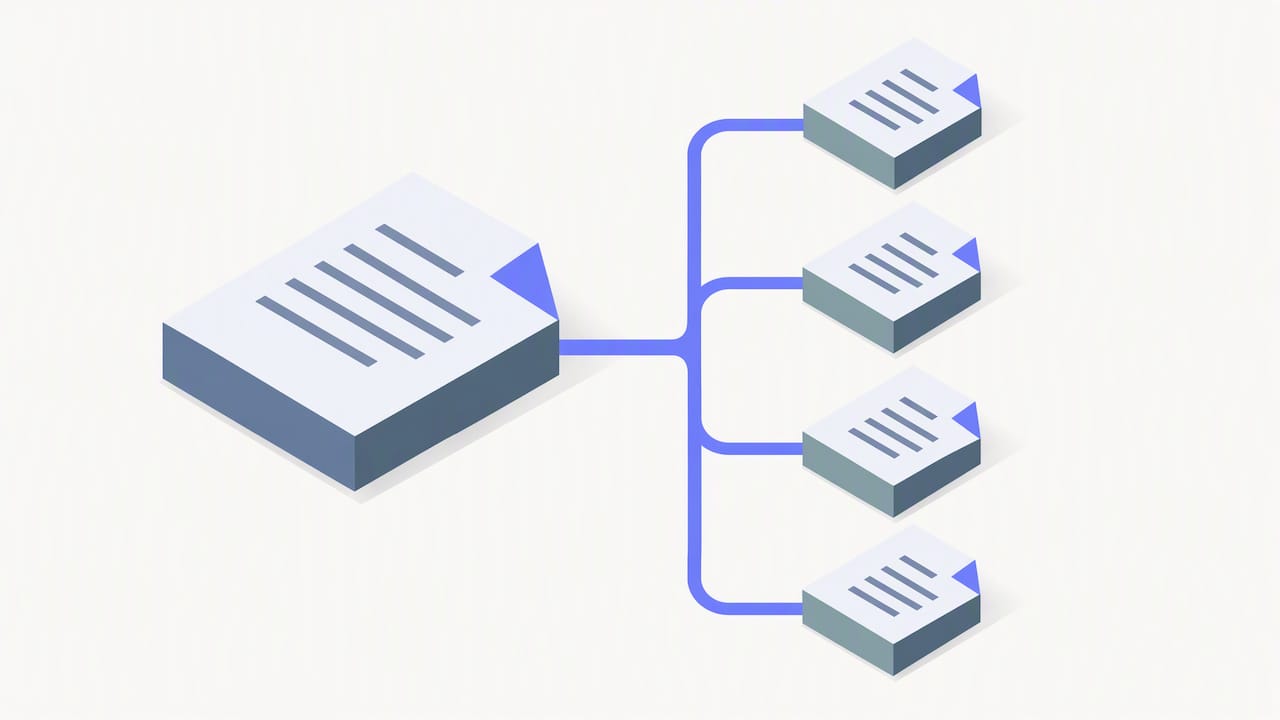
The most flexible setup pairs a Master Service Agreement (MSA) with individual Statements of Work (SOW). The MSA carries the legal boilerplate (confidentiality, IP, liability, termination) once, and each SOW defines a specific project’s scope, timeline, and price. This works well when you expect to run multiple projects with the same developer or firm over time.
A standalone consultant or contractor agreement bundles everything into one document. It fits short, single-project engagements where you do not expect a repeat relationship, like a six-week integration build with a solo freelancer.
A staff-augmentation or team-extension agreement is different in kind: instead of buying a deliverable, you are renting capacity. The developer (or team) works inside your processes, using your tools and your backlog, usually billed hourly or monthly rather than per milestone.
Match the contract type to the shape of the work:
- Short, well-defined project with a clear end date: use a standalone contractor agreement with a detailed SOW.
- Ongoing relationship with multiple projects over months or years: use an MSA plus SOW for each new phase.
- Need for embedded capacity that follows your sprint cadence: use a staff-augmentation or team-extension agreement.
- High uncertainty about scope at the outset: start with a short fixed-price discovery SOW, then switch to staff augmentation or time and materials for build.
The clauses that actually protect you (and the ones that don’t)
Most contract disputes trace back to five or six clauses written too loosely to mean anything when tested. Here is what to require, clause by clause, and why each one matters.
- Scope of work. Write deliverables as specific, checkable items, not goals. “Build a payment processing module that integrates with Stripe and handles refunds, partial captures, and webhook retries” beats “build a payment system.” List what is explicitly out of scope (mobile app, admin dashboard, load testing above a stated volume) so neither side assumes the other is covering it.
- Change management. Require that any scope change go through a written change request (CR), signed by both parties, before work starts and before price or timeline adjusts. Set an approval threshold (say, any CR over a set dollar amount or a set number of hours needs sign-off from a named decision maker) so small tweaks do not require a committee.
- Payment structure. Link payments to milestones, not dates on a calendar. A typical structure: 20 to 30% at signing, the remainder split across milestone deliveries, with a final holdback (commonly a small percentage of total contract value) released only after acceptance testing passes. For longer engagements, escrow services can hold funds until a milestone clears, which protects both sides.
- Acceptance testing. Define what “done” means in testable terms: specific test cases, a stated defect threshold (such as no critical defects and strict limits on minor ones), and a fixed acceptance window (commonly 5 to 10 business days) during which you review and either accept or reject with documented reasons. Include a defect correction window so the developer has a clear, bounded period to fix anything you flag rather than an open-ended obligation.
- IP ownership. This is where most contracts quietly fail. Under U.S. Copyright Office guidance, copyright in software defaults to the person who wrote it, not the person who paid for it, unless the work qualifies as a “work made for hire” or there is a signed written assignment. Simply paying an invoice does not transfer ownership. Copyright Circular 30 explains that a commissioned work only counts as work made for hire if it fits one of nine statutory categories and both parties sign a written agreement that expressly says so at the time the work is commissioned, not after the fact. If your situation does not cleanly fit those categories, use a direct copyright assignment clause instead, requiring the developer to sign over rights upon payment.
- Warranties and liability caps. Ask for a warranty period (30 to 90 days is common) during which the developer fixes defects at no extra charge. Expect pushback on unlimited liability; most developers and firms will only sign if liability is capped at a multiple of fees paid (commonly 1x to 3x), so negotiate the cap rather than trying to remove it entirely.
- Termination and exit. Require a notice period (typically 15 to 30 days), a defined exit-assistance obligation (the developer helps transition knowledge to your team or a successor), and guaranteed handover of all source code, credentials, and documentation regardless of why the contract ended.
- Confidentiality and data protection. A mutual non-disclosure clause, a non-solicit provision if you are worried about poaching, and basic data-handling obligations (how customer or user data is stored, accessed, and deleted at contract end) should all be standard, not optional add-ons.
Pro Tip: Keep a running “red flag” list during negotiation: vague deliverables (“build a scalable platform”), unilateral scope-change rights for the developer, and unlimited liability language with no cap are the three phrases most likely to come back and hurt you.
None of this requires a law firm on retainer, but it does require reading the SOW line by line before anyone signs. A rigorous, written clause checklist, reviewed before every signature, catches the gaps a quick skim misses.
Fixed-price, time and materials, or staff augmentation: picking the right model
The commercial model you choose shapes everything downstream, from how disputes get resolved to how much control you retain over daily work. Four factors should drive the decision: how predictable your budget needs to be, how certain the scope already is, how much the requirements are likely to shift, and how fast you need to move.
- Fixed-price works when scope is well understood and unlikely to change. It gives budget certainty but only holds up if the SOW includes a detailed scope annex and objective acceptance tests; vague fixed-price contracts are where most scope disputes start.
- Time and materials (T&M) suits projects where requirements will evolve. Control cost exposure with a monthly or sprint-level spending cap, mandatory burn-rate reports, weekly demos, and a rule that any work beyond the cap requires a signed change order first.
- Staff augmentation shifts you from buying outcomes to renting capacity. You gain more day-to-day control over priorities, but that control cuts both ways: it strengthens the case that the relationship looks like employment rather than contracting, which raises classification risk (more on that below), and IP terms need to explicitly cover work product created under your direction.
- Hybrid models often work best for ambiguous projects: run a short fixed-price phase to nail down architecture and a detailed scope, then switch to T&M or staff augmentation for the build once requirements are stable.
The practical rule: the less certain you are about scope today, the more you should favor T&M or staff augmentation with strong governance, and save fixed-price for work you can specify in detail up front.
Running the contract day to day: milestones, governance, and disputes
Signing the contract is the easy part. Managing it through delivery is where most of the real risk lives, and most of that risk is manageable with a handful of operating habits.
- Negotiate with priorities, not an all-or-nothing list. Decide in advance which clauses you will not compromise on (IP assignment, acceptance criteria, payment-on-acceptance) and which you can trade (payment cadence, warranty length, notice period). Offer a concession on something low-cost to you in exchange for holding firm on IP or acceptance terms.
- Design milestones around objective checks, not dates. Each milestone should map to a testable deliverable: a working feature that passes a defined test suite, not “progress as of week six.” This removes the subjective judgment calls that turn into arguments.
- Run a fixed governance cadence. Weekly demos, signed sprint or artifact sign-offs, and, for larger engagements, a steering committee that meets monthly to review scope, budget, and risk. Keep a decision log so “we agreed to this in week three” is never a matter of memory.
- Triage change requests on a schedule, not ad hoc. Batch minor CRs for weekly review; escalate anything that changes cost or timeline by a material amount to the steering committee immediately. Include a rollback or contingency clause so a failed feature can be reverted without renegotiating the whole contract.
- Set an escalation path before you need one. Define a sequence: informal resolution between project leads first, then a structured mediation step, then binding arbitration as the last resort before litigation. Naming this in the contract, rather than figuring it out mid-dispute, saves weeks.
- Keep document hygiene tight. Version every SOW, file every signed change request, and archive every acceptance report. When a dispute does happen, whoever has the cleaner paper trail usually wins the argument quickly.
Pro Tip: Treat the acceptance report as a standing artifact, not a one-time form: a dated, signed record of what was tested, what passed, and what didn’t gives you leverage in any later disagreement about whether a milestone was actually met.
Worker classification: the compliance risk most contracts ignore
Contract language alone does not determine whether someone is legally a contractor or an employee. The IRS evaluates the actual working relationship using three categories of evidence: behavioral control (do you direct how, when, and where the work gets done), financial control (who bears investment risk, who sets rates, is payment per project or per hour worked), and the nature of the relationship (is it ongoing and exclusive, or project-based and one of several clients). Calling someone a “contractor” in the contract title does not override what you actually do in practice.
Representative SS-8 determinations published by the IRS show how this plays out: workers with regular mandatory hours, direct manager oversight, and no independent business investment have been found to be employees despite signed contractor agreements. The label on the document matters far less than the operational facts.
Practical steps that reduce misclassification risk:
- Structure engagements around project-based SOWs rather than open-ended hourly availability that mimics a job.
- Limit behavioral controls: avoid mandating specific daily hours, exclusive tool stacks, or training that functions like onboarding a new employee.
- Pay against invoices tied to deliverables or defined periods, not a standard payroll schedule.
- Treat the contractor as an independent business: allow them to work for other clients and avoid integrating them into your internal org chart or Slack-equivalent as if they were staff.
For nearshore or cross-border hires specifically, three structures handle this differently: an Employer of Record (EOR) legally employs the worker in their home country while you direct the work, a vendor or staffing model has a staffing firm manage the employment relationship, and a direct contractor-through-business-entity arrangement has the worker invoice you through their own registered company. Our guide on contractor versus employee status walks through the operational signs worth checking before you pick one. Keep signed SOWs, invoices, and correspondence on file, and when a classification question is close, loop in payroll or tax counsel before signing rather than after a dispute surfaces.
A practical checklist before you sign anything
Before any developer contract gets a signature, run it against a short set of checks rather than trusting a gut feeling that it “looks fine.”
- SOW completeness: deliverables are specific, exclusions are listed, and acceptance criteria are testable, not descriptive.
- IP clause: either a valid work-for-hire provision tied to one of the Copyright Office’s statutory categories, or a direct, signed copyright assignment clause.
- Payment terms: milestones are tied to acceptance, not dates, and a holdback or escrow mechanism covers the final deliverable.
- Confidentiality and data handling: mutual NDA language and a clear statement of how any customer data is stored and deleted at contract end.
- Termination terms: notice period, exit assistance, and guaranteed code and credential handover are all explicit.
- Classification notes: the engagement structure matches the IRS factors for the worker status you intend.
For acceptance specifically, write pass/fail tests wherever you can: a checkout flow processes a defined set of test transactions without error, a reporting feature matches a sample dataset exactly, a defect threshold allows no more than a small, stated number of minor bugs at delivery. For iterative work, structure the SOW around short iterations (one to two weeks), with a clear deliverable definition and a short acceptance window per iteration rather than one acceptance event at the very end.
Poorly scoped deliverables and missing acceptance criteria are consistently cited as leading causes of payment disputes and scope creep in project and procurement guidance, which is the strongest argument for spending the extra hour on this checklist before signing rather than after a dispute starts.
When should you stop doing this yourself? Escalate to legal when the contract value is large relative to your budget, the IP terms are unusual, or cross-border tax and labor rules are involved. Consider a managed partner when you need nearshore talent fast and do not have in-house legal or HR bandwidth to handle contracts, classification, and payment compliance on your own.
How Amazing Devs handles contracts and compliance for clients
A managed nearshore provider typically sources developers through a recruitment process built around technical and cultural fit, then manages the contract and administrative work that typically slows a hire down: drafting support for the SOW, handling IP assignment language, and managing payroll and payment compliance so clients are not navigating cross-border tax rules alone. The goal is to shorten the time between “we need a developer” and “the developer is productive on our codebase.”
Tasks a client can hand off entirely include:
- SOW drafting support, so scope and acceptance criteria are specified clearly from the start.
- IP assignment handling, ensuring work product transfers cleanly under the engagement terms.
- Payroll and payment compliance for cross-border payments to nearshore developers.
- Onboarding and handover processes, so a departing or rotating developer leaves documentation and access behind in good order.
For companies weighing outsourcing against staff augmentation more broadly, our breakdown of staff augmentation’s pros and cons covers the trade-offs in more depth.
When a managed nearshore partner beats handling it yourself
My honest read: handle contracts directly when you already have legal review capacity, the project is a single, well-scoped engagement, and you are hiring domestically where classification and cross-border tax rules do not come into play. Reach for a managed partner when any of three things are true: the project is complex enough that scope will shift, you need developers onboarded in weeks rather than months, or you are hiring across borders and do not want to become an expert in another country’s labor rules by trial and error.
The clearest case for a managed partner is nearshore hiring under time pressure, where a company needs a developer or small team producing code within two to three weeks and has no existing legal or HR infrastructure for cross-border contracts. Trying to build that infrastructure from scratch for one hire rarely pays off. The clearest case for going direct is a single, well-defined project with a trusted contractor you have worked with before, where the SOW and IP terms are already proven.
— Gabriel
Getting help with nearshore staff augmentation and contract support
If the checklist above feels like a lot to manage on top of actually running your project, that is exactly the gap a managed nearshore talent partner is built to close. Such nearshore staff augmentation and team extension services typically pair pre-vetted developers with contract and administrative support, so the SOW, IP assignment, and payment compliance pieces are handled as part of the engagement rather than something you assemble from scratch.
Whether you need one developer for a defined project or an extended team working inside your sprint cadence, start with our nearshore staff augmentation page to see how an engagement is structured, or reach out through our main site to request a sample SOW and talk through your specific contract needs.
FAQ
What is the best software for managing contracts?
There is no single tool every team should use; the right choice depends on whether you need e-signature workflows, clause libraries, or full contract lifecycle tracking with renewal alerts. For most project managers handling developer agreements, a simple combination of a clause checklist, version-controlled SOW documents, and a shared acceptance-report archive covers the core need without added software cost.
What are the 7 rules of a contract?
Definitions vary across legal sources, but a commonly cited version requires an offer, acceptance, consideration, capacity of the parties, mutual consent, legality of the subject matter, and a clear statement of terms. For developer agreements specifically, the practical equivalents are scope, IP, payment, acceptance, confidentiality, termination, and classification, the categories covered in the checklist above.
What is L1, L2, L3, and L4 developer?
These levels are internal seniority tiers used by some companies (often associated with big tech career ladders) to describe engineer experience and scope of responsibility, typically ranging from entry-level (L1 or L2) to senior or staff-level (L3 or L4) engineers. The exact definitions are not standardized industry-wide, so the labels mean different things depending on the company using them.
Is SDE a stressful job?
Software development engineer (SDE) roles can be demanding, particularly around deadlines, on-call rotations, and shifting requirements, though stress levels vary widely by company, team, and project scope. Clear contracts with well-defined scope and acceptance criteria tend to reduce stress on both the client and developer side by removing ambiguity about what “done” looks like.
Does a work-for-hire clause automatically give me ownership of the code?
Only if the work fits one of the statutory categories the Copyright Office recognizes for commissioned works, and both parties sign a written agreement that expressly states it is a work made for hire at the time the work is commissioned. If your situation does not fit those categories, use a direct copyright assignment clause instead to be safe.