Nearshore Developer Rates in LATAM: The Costs U.S. Quotes Miss

Nearshore developer rates in Latin America vary by country and seniority, and full-time costs depend on the engagement. If you need sustained capacity with U.S. time-zone overlap, nearshore usually beats both onshore cost and offshore coordination friction. Rates still swing widely by country, experience level, and how you structure the engagement, which is what the rest of this guide breaks down.
TL;DR:
- Hourly contracting suits short, defined projects; monthly FTE or staff augmentation usually lowers effective hourly costs when you need sustained capacity.
- Compare quotes after converting them to monthly FTE costs and adding recruiting, payroll or employer of record fees, applicable benefits, and management time.
- Specialists in AI, machine learning, cloud infrastructure, security, and high scale systems can cost more; labor supply and currency shifts affect country rates.
- Ask whether rates include benefits and compliance, and check retainers, ramp up charges, notice periods, and replacement terms before judging the headline price.
Table of Contents
- Marketwide LATAM Rate Bands and Why They Vary
- Country and Seniority Breakdown by Market
- How Common Engagement Models Change the Billed Rate
- Hidden Costs and the True All-In Monthly Number
- A Practical Checklist for Comparing Proposals
- How Sourcing Rigor Changes Realized Pricing
- When Nearshore Wins on Cost
- Getting Predictable Nearshore Pricing With Amazing Devs
- FAQ
- Sources
Marketwide LATAM Rate Bands and Why They Vary
Across Latin America, rates generally rise with seniority, with specialists often costing more than generalist developers. Monthly full-time-equivalent costs depend on the hourly rate and hours worked, and generally rise with seniority. These are headline ranges, not quotes, and the spread inside each band is real: Contractors with the same seniority and specialty can have different rates based on country alone.
Several forces drive that spread. Local labor markets matter most: countries with larger software talent pools tend to have more price competition at the mid-tier, while markets with fewer specialized engineers see senior rates pulled upward by scarcity. Statista’s data on IT jobs by country illustrates how talent-pool size varies market to market, which is one reason the same seniority level prices differently depending on where you hire.
Other drivers worth tracking:
- Specialization: AI/ML engineers, platform architects, and security specialists command a premium over generalist full-stack roles.
- Local demand: Markets with strong domestic tech sectors or heavy U.S. enterprise hiring see upward pressure on senior rates.
- Exchange-rate sensitivity: Currency volatility in some LATAM economies means quoted USD rates can shift year to year even when local salaries stay flat.
- Client overhead: Agencies and staffing firms price in sourcing and vetting costs, which raises the billed rate above a developer’s take-home pay.
The headline hourly or monthly rate is also not your all-in cost. A quoted rate typically covers the developer’s compensation and the vendor’s margin, but it rarely includes recruiting, payroll compliance, management time, or the cost of turnover if the engagement doesn’t work out. We’ll walk through how to size those additions later in this guide, but it’s worth holding both the rate you’re quoted and the rate you’ll actually pay once the engagement is running.
Country and Seniority Breakdown by Market
Rate bands differ meaningfully across popular LATAM markets for U.S. companies, including Mexico, Colombia, Brazil, Argentina, Chile, and Peru. The ranges below are indicative hourly bands by seniority, useful for sanity-checking a quote rather than treating as fixed pricing.
- Mexico: Rates vary by seniority, with more experienced developers generally costing more. Proximity and overlapping time zones with the U.S. keep demand, and prices, on the higher end of the LATAM range.
- Colombia: Rates vary by seniority, with more experienced developers generally costing more. A growing tech hub with competitive mid-level pricing.
- Brazil: Rates vary by seniority, with more experienced developers generally costing more. Brazil has one of the largest software engineering workforces in the region, which supports both deep specialization and a wide range of price points within the same seniority tier.
- Argentina: Rates vary by seniority, with more experienced developers generally costing more. Statista’s figures on software and IT services employment in Argentina point to a sizable domestic tech workforce, though currency volatility can affect quoted USD pricing over time.
- Chile: Rates vary by seniority, with more experienced developers generally costing more.
- Peru: Rates vary by seniority, and comparable experience can be priced differently across markets.
To turn an hourly quote into a monthly FTE estimate, multiply it by the number of hours in the engagement, using a reliable remote employee time tracking app to verify hours across time zones. A developer’s monthly cost depends on the quoted hourly rate and hours worked, before any benefits or withholding adjustments. If the engagement is structured as direct employment rather than contractor billing, statutory benefits (health coverage, paid leave, social security contributions) can add to base compensation, depending on the country’s labor code, which is one reason most U.S. companies use a staffing partner or employer-of-record rather than hiring developers as direct employees themselves.
Certain skills push rates above these bands regardless of country. AI/ML engineers, backend developers with high-scale systems experience, and specialists in cloud infrastructure (AWS, Azure, Kubernetes at scale) can command a premium over generalist developers at the same seniority level, reflecting tighter supply for those specific skill sets.
How Common Engagement Models Change the Billed Rate
The pricing model you choose affects your effective hourly rate as much as country or seniority does. Four structures cover most nearshore engagements:
- Hourly contractor: You pay for hours actually worked, with no minimum commitment. This model offers flexibility for short projects but often carries a premium rate since the vendor is pricing in the unpredictability of your demand.
- Monthly FTE (time-and-materials): You commit to a full-time engineer at a fixed monthly rate, typically based on the hours agreed for the month. This tends to lower the effective hourly rate compared to pure hourly billing, since the vendor can plan around steady utilization.
- Staff augmentation or team extension: You embed nearshore developers directly into your existing team and processes, usually billed monthly per developer, with the staffing partner handling recruiting, contracts, and compliance.
- Managed or outsourced team: A vendor owns delivery of a defined scope or product area, typically billed as a project fee or blended team rate rather than per-developer pricing.
Contract terms shape your real cost more than the headline rate does. Watch for retainers or monthly minimums that apply even during low-usage weeks, ramp-up periods where you pay full rate before a developer is fully productive, notice periods that lock in cost if you need to scale down quickly, and employer-of-record (EOR) fees layered on top of base compensation. As a decision rule: choose hourly contracting for short, well-defined projects; choose monthly FTE or staff augmentation when you need sustained capacity over a sustained period, since the lower effective rate and continuity typically outweigh the reduced flexibility.
Hidden Costs and the True All-In Monthly Number
The quoted rate is rarely the full story. Several cost categories sit outside the headline number and need to be added before you can compare offers honestly.
- Recruiting and sourcing: Sourcing, screening, and technical vetting take real time and often real money, whether you do it in-house or pay a staffing partner to do it.
- Payroll and EOR compliance: Running payroll in a foreign country, or paying an employer-of-record to do it, typically adds a percentage fee on top of base compensation.
- Benefits and statutory costs: Health coverage, paid leave, and social security contributions vary by country but can add to a direct-hire developer’s base pay.
- Management overhead: Someone on your team needs to onboard, direct, and review nearshore developers, which is a real cost even when it doesn’t appear on an invoice.
- Turnover: Losing a developer mid-project means repeating sourcing and onboarding costs, plus lost productivity during the gap.
Recruiting alone is a meaningful line item: SHRM’s research on real recruitment costs shows that hiring expenses extend well beyond the advertised salary or rate, a dynamic that holds just as true for nearshore contractor placements as it does for domestic hires.
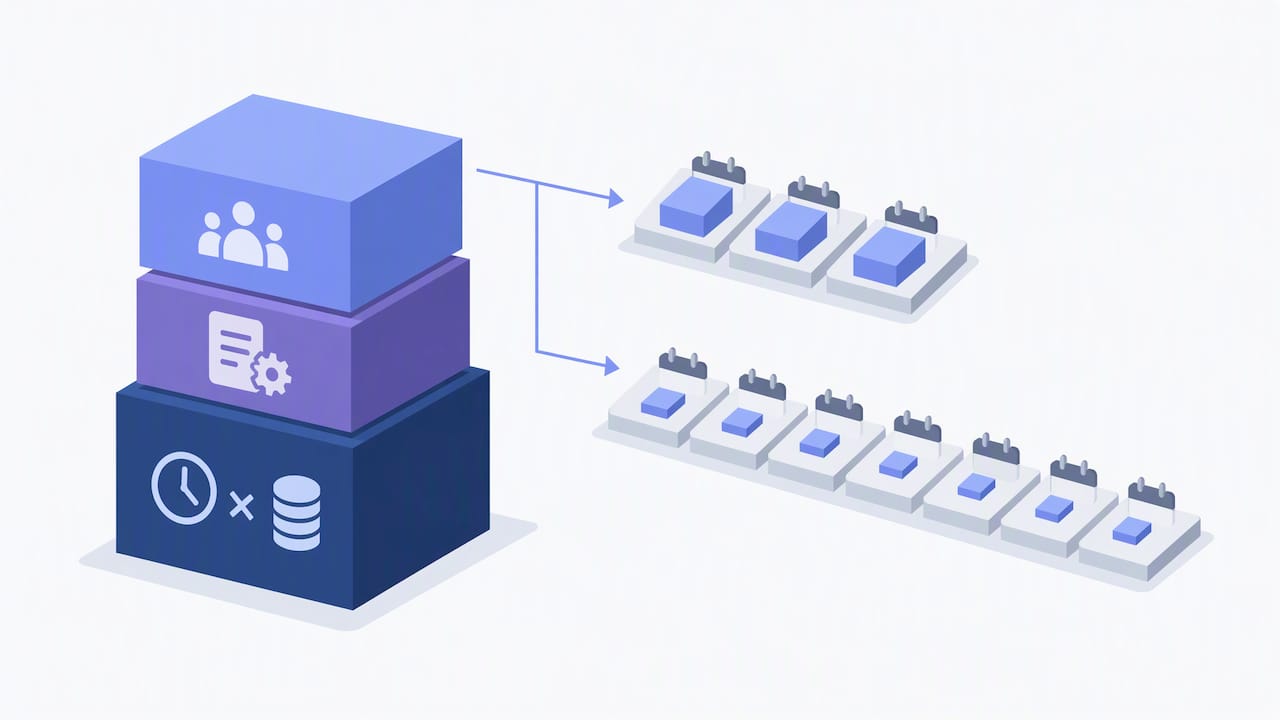
Here’s sample math: a developer’s monthly cost depends on the hourly rate and hours worked. Adding EOR or payroll administration fees and recruiting costs raises the all-in monthly cost above the headline rate. Engagements that run longer dilute the recruiting cost further, which is one reason retention matters: a developer who stays longer spreads that fixed sourcing cost across a larger base, lowering your true per-month average.
A Practical Checklist for Comparing Proposals
Comparing nearshore quotes fairly means normalizing them to the same terms before you compare numbers at all.
- Convert every quote to a monthly FTE basis using the hours agreed for the month, even if the vendor quotes hourly.
- Add estimated overhead: payroll or EOR fees, benefits if applicable, and an amortized recruiting cost.
- Normalize for seniority: confirm that “senior” means the same years of experience and scope across vendors, since titles aren’t standardized.
- Score each proposal against a consistent rubric: all-in cost, time-zone overlap, English proficiency, specialized skill match, contract flexibility, and turnover or retention risk.
- Run the numbers side by side before making a decision, not just the headline rates.
As a worked example: Offer A quotes $35/hour with no stated overhead, while Offer B quotes $42/hour but includes payroll, benefits, and replacement guarantees. Offer B’s fully loaded cost depends on the terms included. The higher hourly rate is actually the lower total cost once you account for what each number includes.
Pro Tip: Always ask whether a quoted rate is “loaded” (includes benefits and compliance costs) or “unloaded” (base pay only) before comparing it to another offer.
How Sourcing Rigor Changes Realized Pricing
Headline rates tell you what a developer costs on paper. What determines your real cost over time is how well the sourcing process matches skills and working style to your team, because a mismatch shows up later as turnover, rework, or management time that never appears on the original quote.
A rigorous assessment process, technical screening paired with a genuine check on cultural and communication fit, reduces the odds of a costly mid-project replacement.
Our approach at Amazing Devs centers on exactly that kind of screening, combined with handling the contract and compliance work that otherwise falls on your team. Over a sustained engagement, that combination tends to show up as lower realized cost: fewer replacement searches, less manager time spent on onboarding repeats, and more predictable monthly spend. When you compare quotes, it’s worth asking each vendor how they screen for fit, not just for technical skill, since that answer predicts a meaningful share of your total cost.
When Nearshore Wins on Cost
Nearshore makes the clearest financial sense when you need sustained development capacity, real-time overlap with your team, and collaboration tight enough that a multi-hour time difference would slow everyone down. The cost advantage is real, but it’s only fully captured when onboarding is deliberate and retention holds, since a developer who leaves early erases most of the savings a lower rate promised.
— Gabriel
Getting Predictable Nearshore Pricing With Amazing Devs
We built our nearshore staff augmentation service around the gap this guide keeps circling back to: the difference between a quoted rate and what you actually pay. We handle recruiting, technical and cultural assessment, and contract management for Brazilian developers, so the rate you agree to is closer to the rate you end up paying. If you want a cost estimate built around your specific role and timeline, a discovery call is the fastest way to get one.
FAQ
What is a typical nearshore developer hourly rate?
Nearshore rates in Latin America vary by country and seniority, with mid-level rates depending on the market and engagement. Senior specialists in high-demand skills like AI/ML or cloud infrastructure often command higher rates.
How much does a nearshore developer cost per month?
A full-time nearshore developer’s monthly cost depends on the hourly rate, hours worked, country, and experience level. Payroll, benefits, and recruiting costs can raise the all-in figure above the headline rate.
Is nearshore cheaper than offshore development?
Offshore rates in regions like South Asia can be lower on paper, but nearshore developers in Latin America offer time-zone overlap with U.S. teams that often reduces coordination delays and management overhead. For projects needing close, real-time collaboration, the lower headline cost of offshore can be offset by slower iteration and communication friction, as covered in our nearshore versus offshore guide.
What hidden costs should I budget for beyond the hourly rate?
Beyond the quoted rate, budget for recruiting and sourcing, payroll or employer-of-record fees, statutory benefits where applicable, and management time for onboarding. SHRM’s data on recruitment costs shows these additions can meaningfully raise total hiring cost beyond the advertised rate.
How does Amazing Devs help control nearshore hiring costs?
We manage recruiting, technical and cultural vetting, and contract administration for nearshore Brazilian developers through our nearshore staff augmentation and Team Extension Model services. That reduces the sourcing and compliance work that typically drives realized cost above a vendor’s headline rate.