Build a Template First Candidate Scoring Matrix in One Afternoon
A candidate scoring matrix is a structured form that scores each applicant on the same job-related competencies using a shared rating scale, so interviewers compare evidence instead of gut feelings. It works best for structured interviews and for ranking finalists before a final offer decision. Used well, it turns scattered opinions into a defensible, auditable record of why one candidate beat another.
TL;DR:
- Building an effective scoring matrix requires selecting five to seven job-critical competencies based on a thorough job analysis and including knockout criteria for non-negotiables.
- Using a consistent rating scale with behavioral anchors and providing specific evidence for each score reduces rating disagreements and improves reliability.
- Independently scoring candidates immediately after interviews and then reaching consensus prevents dominant voices from biasing the final assessment.
- Ensuring the matrix aligns with legal requirements involves documenting job relevance, applying scores uniformly, and maintaining records to defend decisions if challenged.
- Different templates serve specific hiring stages, from short shortlists with quick screening to detailed evaluation forms, with additional scoring sections for technical or role-specific assessments.
Table of Contents
- What goes into a scoring matrix
- How to build a scoring matrix step by step
- Rating scales with behavioral anchors that actually work
- Running panel interviews without letting one voice dominate
- Staying on the right side of employment law
- Which template fits each stage of hiring
- What we have learned scoring technical candidates
- When the matrix should guide the hire, not make it
- A faster path to vetted technical talent
- FAQ
- Sources
What goes into a scoring matrix
A usable matrix has five parts: the competency name, a one-line definition so every rater interprets it the same way, a weight that reflects how much that skill matters for the role, a rating scale, and an evidence field where the interviewer writes down what the candidate actually said or did. Skip the evidence field and the matrix becomes just a number with no paper trail behind it.
Competencies should come from a real job analysis, not a guess. Pull the top five to seven requirements from the job description, then run a short workshop with subject matter experts (SMEs), the hiring manager, a senior team member, and sometimes a recruiter, to confirm which ones actually predict success in the role.
Some requirements are not worth weighting at all. Legal work authorization, a required certification, or a minimum years-of-experience threshold work better as knockout gates: pass or fail, outside the weighted score.
- Competency name and a short, unambiguous definition
- Weight reflecting relative importance to the role
- Rating scale with labeled proficiency levels
- Evidence field for notes, quotes, or examples
- Knockout gates for non-negotiable requirements, scored separately from weighted competencies
How to build a scoring matrix step by step
Building a matrix that survives contact with a real interview takes four steps, and you can pilot the whole thing in one afternoon.
- Convene SMEs and list job-critical competencies. Bring in the hiring manager and two or three people who currently do the job, and ask them to name the five to seven skills or behaviors that separate strong performers from weak ones. The OPM structured interview guide recommends having SMEs draft more questions and competencies than you need, since some get cut after piloting.
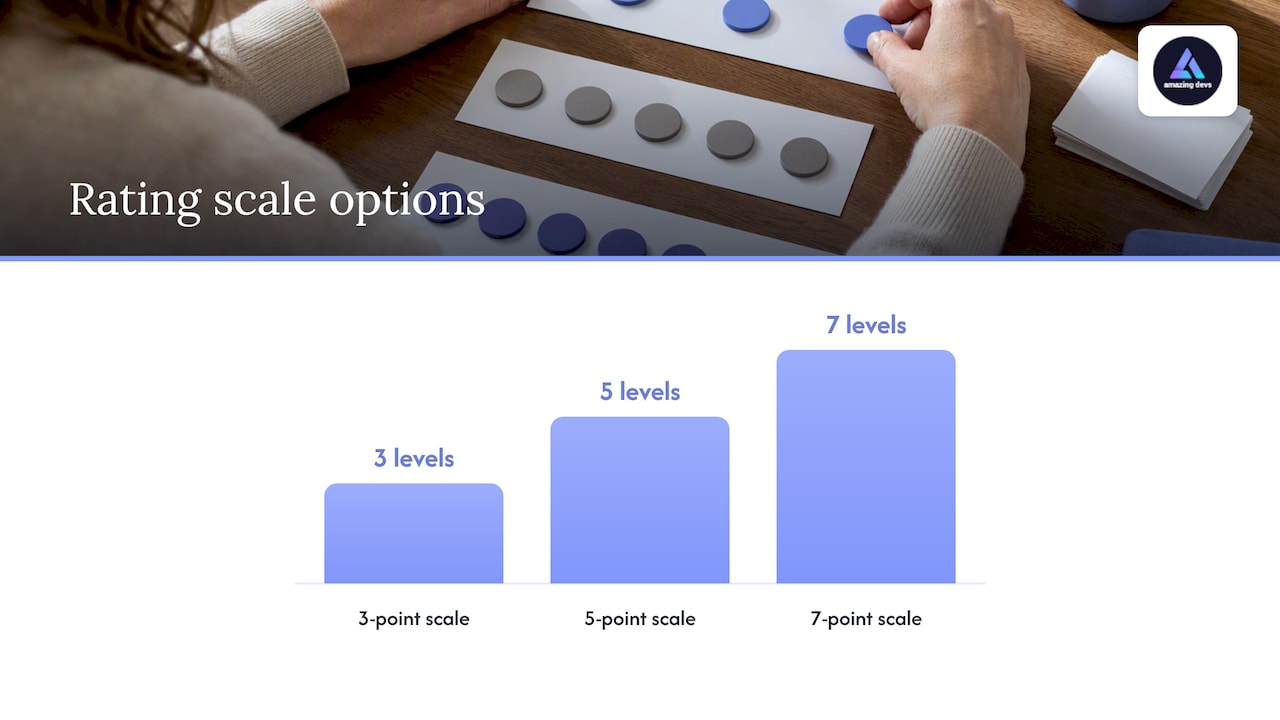
- Pick one consistent rating scale and label the anchors. Choose a 3, 5, or 7-point scale and use it across every competency; mixing scales inside one matrix is a common source of rater confusion.
- Assign weights and define knockout criteria. Give each competency a percentage weight that sums to 100, then multiply each rating by its weight and add the results. Say a candidate scores 4 out of 5 on technical skill (weighted 40%), 3 on communication (weighted 30%), and 5 on problem solving (weighted 30%): the weighted total is (4 x 0.40) + (3 x 0.30) + (5 x 0.30), or 1.6 + 0.9 + 1.5, which equals 4.0 out of 5.
- Pilot with two or three mock candidates and calibrate. Have two raters independently score the same mock interview, compare notes, and adjust anchor wording before anyone uses the matrix live.
Pro Tip: Run your pilot scores past someone who was not in the SME workshop. If their rating lands far from the panel’s, your anchor language probably needs clearer behavioral examples.
Rating scales with behavioral anchors that actually work
Raters disagree less when every competency uses the same scale and when each point on that scale has a concrete behavioral description attached, not just a number. The OPM structured interview guide recommends exactly this: one common scale, typically 3 to 7 levels, with proficiency examples written out for each level and vetted by SMEs.
Take “problem solving” as the sample competency:
- 3-point scale: 1 = struggled to structure the problem, 2 = solved it with prompting, 3 = solved it independently with a clear approach.
- 5-point scale: adds “2” for partial structure with major gaps and “4” for an independent, mostly clear approach with minor missteps.
- 7-point scale: splits each level further, useful for senior or highly technical roles where fine distinctions matter.
A matrix form is only as strong as its documentation: the OPM structured-interviews handbook shows sample rating forms built around independent scoring followed by a group discussion, which keeps each number tied to a specific, written justification rather than an impression.
Whatever scale you choose, require one sentence of supporting evidence per rating, a quote, a specific example, or a description of what the candidate did, so a score can be explained months later.
Running panel interviews without letting one voice dominate
The defensible sequence is simple: every panelist scores independently immediately after the interview, before any group discussion happens, and only then does the panel meet to reach consensus. The OPM structured-interviews handbook builds its sample forms around this exact order, since independent ratings followed by consensus reduce the pull of a dominant panelist and make the final record easier to defend in an audit.
A chairperson should run the consensus meeting, note any score that changes during discussion, and log the reason for the change next to the original rating, not instead of it.
Common rater errors and how to counter them:
- Halo effect (one strong answer inflates every other score): fight it with separate scoring per competency, not one overall impression.
- Leniency or strictness (a rater consistently scores high or low): catch it with calibration sessions using anonymized example answers.
- Central tendency (everyone clusters around the middle): counter it with behavioral anchors specific enough to justify extreme scores.
- “Similar to me” bias: reduce it by scoring blind to résumé details during calibration practice.
Pro Tip: Run calibration sessions on anonymized, already-scored transcripts before live interviews begin. Raters practice applying the same anchors without any cue about who the candidate is.
Staying on the right side of employment law
Before any matrix goes live, check it against basic fairness rules. The EEOC’s guidance on employment tests and selection procedures requires that any selection procedure, a scoring matrix included, be job-related and consistent with business necessity. If scores end up producing a disparate impact on a protected group, the employer has to validate the procedure or switch to a less discriminatory alternative that still measures the job requirements.
A few practical guardrails follow from that:
- Base every competency on documented job requirements, not personal preference.
- Keep rating anchors and evidence notes on file in case a hiring decision is later questioned.
- Avoid disability-related questions before a conditional offer is made, consistent with ADA pre-offer restrictions.
- Apply the same matrix and scale to every candidate for a given role, with no undocumented exceptions.
Which template fits each stage of hiring
Different stages call for different forms. A resume-screening matrix is short: a handful of must-have and nice-to-have criteria scored quickly to build a shortlist. An interview rating sheet is longer, with full competency definitions, weights, and an evidence field per competency, filled out independently by each interviewer. A panel consensus form captures the group’s final agreed scores plus notes on any changes made during discussion.
- Use a resume-screening matrix at the sourcing stage to build an initial shortlist.
- Use a full interview rating sheet during each structured interview.
- Use a panel consensus form once all interviewers have scored independently.
- For technical interviews, add a pair-programming scoring section; our pair-programming interview scripts show how that section can sit inside the same sheet as the standard competency ratings.
- For non-technical roles, swap the pair-programming section for a written or role-play work sample scored on the same scale.
What we have learned scoring technical candidates
In our own hiring process, we build pair-programming scripts directly into the rating sheet, so a candidate’s coding session gets scored on the same scale as their interview answers. We also require a one-line evidence note for every rating, which keeps scores tied to something a candidate actually said or did rather than a general impression, and we lean on short paid work samples as tie-breakers between close finalists.
When the matrix should guide the hire, not make it
A scoring matrix gives you structured evidence, not the full picture. We treat it as one strong input among several: reference checks, a work sample, and how a finalist performs in an offer-stage conversation all carry information a rating sheet cannot capture.
When two candidates finish close, the simplest tie-break is a short, SME-scored work sample rather than another round of gut-feel debate.
— Gabriel
A faster path to vetted technical talent
Building and calibrating a scoring matrix takes real hours: SME workshops, pilot rounds, calibration sessions. We shorten that path by pairing structured scoring sheets, including pair-programming scripts, with developers vetted on technical skill and cultural fit, so your shortlist starts further along than a cold applicant pool.

Our nearshore staff augmentation services and Team Extension Model give you access to pre-assessed Brazilian developers without running every stage of the matrix build yourself. If you would rather have a managed assessment process than build one from scratch, get in touch through our nearshore staffing page to talk through your next hire.
FAQ
What is the 80/20 rule in interviewing?
The idea is to gather enough behavioral evidence to score competencies accurately rather than filling the time with interviewer commentary.
What is a scoring matrix?
A scoring matrix is a structured form that rates each candidate on the same job-related competencies using one consistent scale, with weights reflecting each competency’s importance to the role. It typically includes a field for evidence notes, so every score is backed by a specific example from the interview.
What is the 70/30 rule in hiring?
Definitions vary, but one common version splits evaluation weight roughly between technical or role-specific skills and fit factors like communication or teamwork, with the exact split set by the hiring team based on the role. There is no single official standard behind this figure, so treat it as a rough planning heuristic rather than a fixed rule.
What are the 5 C’s of interviewing?
Different organizations define this differently, so there is no single agreed list. Common versions include factors like competence, character, communication, culture fit, and commitment, but a hiring team should define its own competencies from a job analysis rather than relying on a generic acronym.
Sources
- Employment Tests and Selection Procedures | U.S. Equal Employment Opportunity Commission
- Structured Interview Guide | U.S. Office of Personnel Management